
Chicago's Renter Protection Fight Heads to a Final Vote — But Not the One Landlords Feared
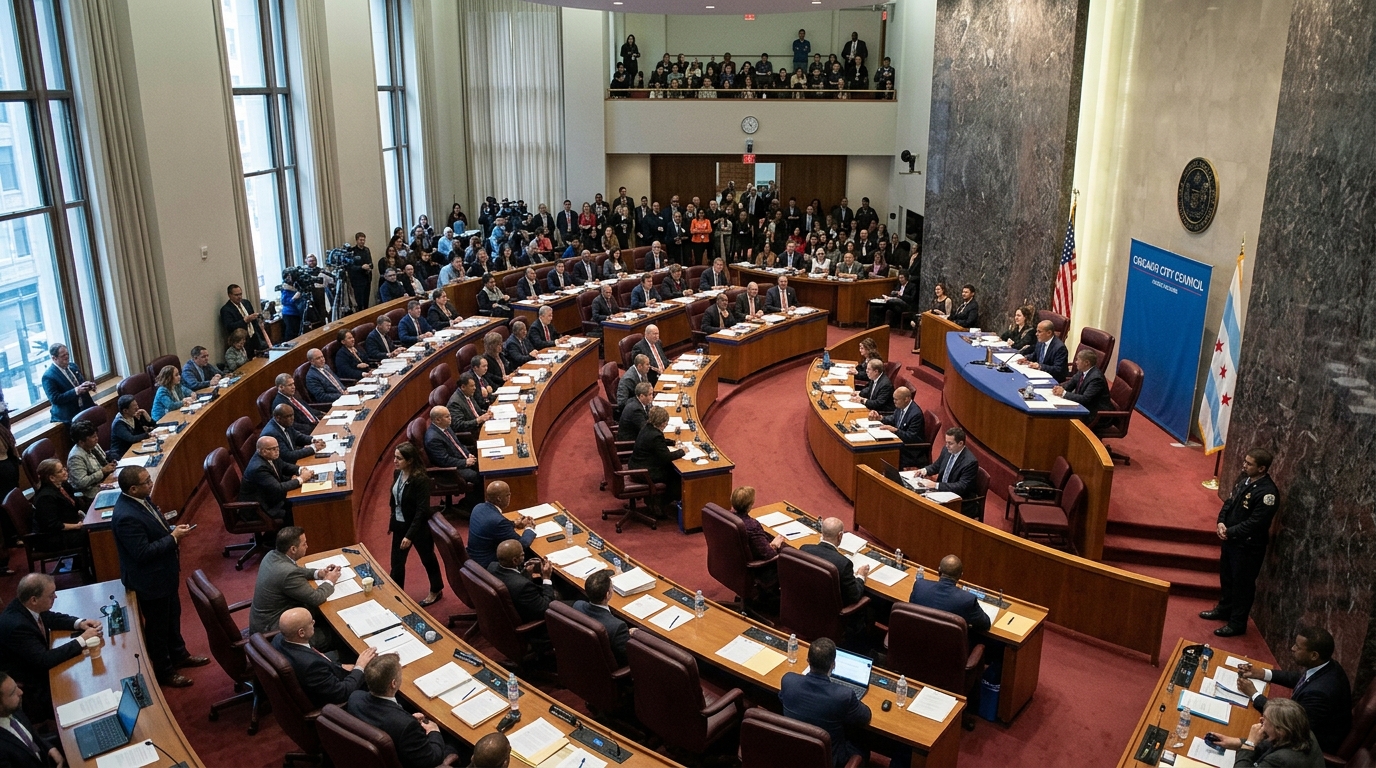
Chicago's yearlong battle over how far the city should go to protect tenants is about to reach a milestone. The City Council is set to cast its final vote on Mayor Brandon Johnson's Protecting Renters Ordinance (PRO) on September 23, closing out months of hearings, rallies, and closed-door negotiations between City Hall, tenant organizers, and the real estate industry.
But the version of the ordinance headed to the floor looks noticeably different from the one Johnson first unveiled. In the weeks leading up to last week's Housing Committee vote, the mayor's office quietly dropped two of the bill's most contested provisions: a "just cause" eviction requirement and mandatory relocation payments for displaced tenants. For landlords and property managers who have been watching this fight closely, that's the headline.
What the PRO Originally Proposed
When Johnson introduced the Protecting Renters Ordinance earlier this year, it was framed as one of the most ambitious tenant-protection packages in the city's history. Early drafts included a new city bureau dedicated to rental housing oversight, a Tenant Bill of Rights, a citywide rental registry, and — most controversially for landlords — a just cause eviction standard that would have required property owners to state and document a legally recognized reason before ending a tenancy, even at lease expiration.
Paired with that was a relocation assistance requirement: landlords terminating a lease without a qualifying "just cause" reason would have owed displaced tenants a cash payment to help cover moving costs and security deposits on a new unit. Together, the two provisions were designed to make no-fault evictions and non-renewals significantly more costly and legally complicated for property owners across the city.
Unsurprisingly, the provisions drew fierce opposition from landlord associations, small property owners, and the broader real estate industry, who argued the requirements would expose owners — particularly smaller ones with just a handful of units — to open-ended liability and discourage new investment in Chicago's rental housing stock at a moment when the city is already grappling with tight supply.
What Changed — and Why
That opposition helped drive the scaled-back version that narrowly cleared the Housing Committee on September 16. According to reporting from the Chicago Sun-Times and WTTW, both the just cause eviction mandate and the relocation payment requirement were stripped from the bill in the final round of negotiations before the committee vote. Ald. Gilbert Villegas, who has led a rival effort in the Zoning Committee, put the political dynamic bluntly: "Go ahead and pass yours today and will pass ours tomorrow and then we'll see" — a reference to the parallel track his own proposal, the FAIR Ordinance, has been running on.
The removal of these two provisions represents a substantial concession from the mayor's original vision. Without a just cause requirement, landlords retain the ability to decline to renew a lease or end a tenancy without having to document a specific, legally enumerated reason — a significant point of relief for property owners who worried about losing flexibility to manage problem tenants or reposition units. And without the relocation payment mandate, ending a tenancy no longer carries an automatic cash obligation, removing what many landlords viewed as the bill's most expensive and unpredictable cost.
Housing advocates, for their part, have criticized the rollback as gutting the ordinance's teeth, arguing that a renter-protection law without just cause protections leaves tenants just as vulnerable to sudden, unexplained displacement as they were before. That tension is likely to resurface as the bill heads toward its September 23 floor vote — the article covering the committee's passage noted that just two alderpeople have the procedural power to block a final vote at that meeting, meaning the outcome, while expected to favor passage, isn't entirely locked in.
What's Still in the Bill
Even with those two provisions removed, the Protecting Renters Ordinance isn't a toothless measure. Reporting indicates the scaled-back version still includes a new regulatory framework for rental housing oversight and continues to differentiate obligations for large corporate landlords versus smaller property owners — a structural approach that, notably, mirrors language found in the competing FAIR Ordinance. Both proposals, despite their political rivalry, converge on the idea that Chicago's rental rules should no longer treat a small landlord with a handful of units the same way they treat a large institutional owner with a portfolio spanning multiple wards.
A Bill Still Racing Its Rival
The PRO's path to a floor vote hasn't unfolded in isolation. Ald. Villegas's FAIR Ordinance — introduced as three companion measures amending the city's Residential Landlord and Tenant Ordinance — has been moving through the Zoning Committee on essentially the same timeline, backed by a coalition of landlord groups and business interests. Where the PRO (even in its trimmed-down form) still contemplates a new rental bureau and registry-driven enforcement, the FAIR Ordinance was built explicitly around avoiding new city fees, new hires, or a standalone Tenant Bill of Rights. City Council may ultimately need to reconcile the two, or choose one, in the sessions following the 23rd.
What This Means Going Forward
For property owners across Chicago, the September 23 vote is the moment to watch. The removal of just cause eviction requirements and mandatory relocation payments substantially changes the ordinance's practical impact on day-to-day leasing decisions — but it doesn't mean the broader regulatory shift underway in Chicago rental housing has stopped. A new oversight framework, differentiated rules by landlord size, and heightened enforcement expectations all appear likely to survive in some form, whether through the PRO, the FAIR Ordinance, or some blend of the two negotiated after the vote.
Landlords, property managers, and tenants alike should expect the coming weeks to bring further clarity — and very possibly further changes — as Chicago's City Council works to reconcile two ordinances that agree on the problem but disagree sharply on the solution.
